|
|
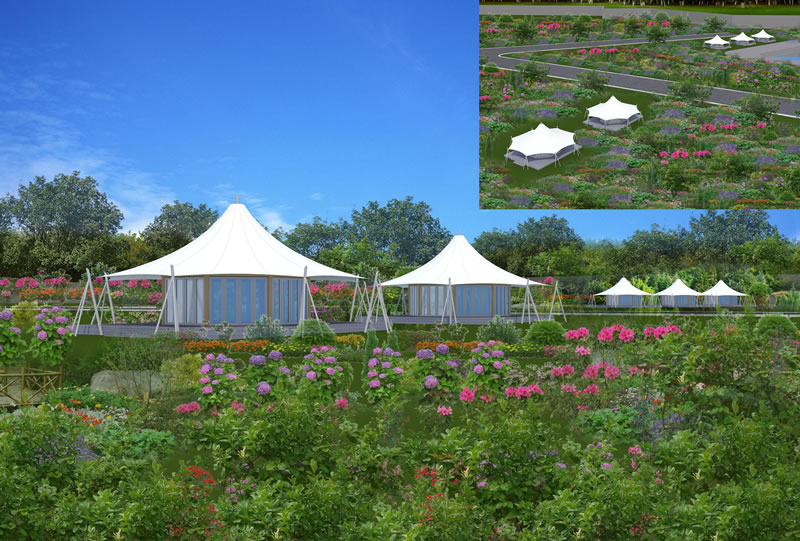
Landscape Membrane Structure
Landscape tension membrane is an architectural system constructed with flexible membrane materials and prestressed structures, achieving lightweight large-span spatial coverage through self-balanced tension. It employs coated membrane materials with a light transmittance of 10%-40%, combined with curved shapes to create a composite lighting effect of natural and artificial illumination. It is commonly used for sunshade and rain shelter in gardens and landscapes, as well as urban public space decoration.
Lightweight
The reason for the low self-weight of tension structures lies in their reliance on prestressed forms rather than materials to maintain structural stability. This results in a significantly lighter self-weight compared to traditional building structures while retaining excellent stability. Architects can utilize its lightweight and large-span characteristics to design and organize structural details, organically unifying its lightweight and stable structural properties.
Light Transmittance
Light transmittance is one of the most widely recognized features of modern membrane structures. The translucency of membrane materials can provide the required illumination for buildings, which is crucial for energy efficiency. It is particularly important for commercial buildings and other spaces requiring high levels of brightness. Through the combined use of natural and artificial lighting, the translucency of membrane materials offers greater aesthetic creativity in architectural design. At night, this translucency transforms membrane structures into sculptures of light.
The light transmittance of membrane materials is determined by their base fibers, coatings, and colors. The spectral transmittance of standard membrane materials ranges between 10% and 20%, while some can reach up to 40%, and others may be opaque. The translucency and color selection of membrane materials can be adjusted through coating or surface layer colors. By appropriately combining membrane materials with translucent insulating materials, multi-layered membranes with insulation can achieve translucency. Even with a spectral transmittance of just a few percent, the membrane roof still appears bright and translucent to the human eye, maintaining the visual appeal of a lightweight roof. |
 ahyx@ahyx158.com